Transportation Management Systems Market Industry Overview with Key Growth Factors and Emerging Technology Trends 2032

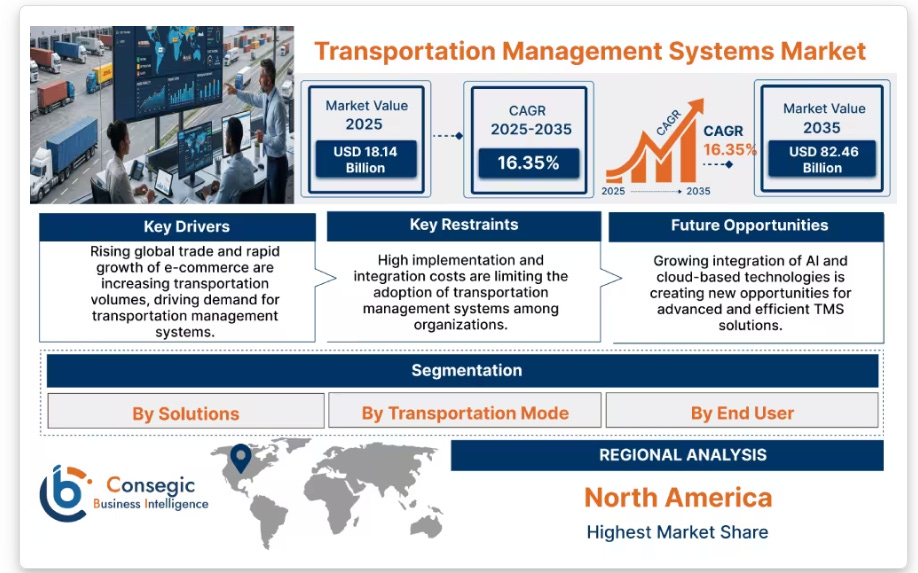
The Transportation Management Systems (TMS) market has become an essential component of modern supply chain and logistics operations, enabling organizations to efficiently plan, execute, and optimize the movement of goods. TMS solutions provide real time visibility, route optimization, freight management, and analytics, helping businesses reduce transportation costs while improving delivery performance and customer satisfaction. As global trade continues to expand and supply chains become increasingly complex, the demand for advanced transportation management solutions is growing rapidly.
The increasing adoption of digital technologies, including cloud computing, artificial intelligence, and IoT, is transforming traditional logistics operations into more efficient and data driven systems. Organizations across industries such as manufacturing, retail, and e commerce are leveraging TMS solutions to streamline operations, enhance operational efficiency, and gain better control over transportation networks. As a result, the TMS market is witnessing strong growth and is expected to play a crucial role in shaping the future of global logistics and supply chain management.
Market Size & Forecast
The global transportation management systems market was valued at approximately USD 18.56 billion in 2025 and is projected to reach around USD 68.36 billion by 2033, growing at a CAGR of approximately 17.8 percent during the forecast period.
This strong growth is driven by the rapid expansion of the e commerce sector, increasing globalization of trade, and rising demand for efficient logistics and supply chain solutions. Organizations are increasingly adopting TMS platforms to automate manual processes, reduce operational costs, and improve overall supply chain visibility. Additionally, advancements in cloud based solutions and real time analytics are further accelerating market growth, enabling businesses to respond quickly to dynamic logistics environments.
Key Highlights
Market Size & Growth:
The market is witnessing rapid expansion driven by increasing logistics complexity and digital transformation.
Primary Growth Drivers:
Growth of e commerce, rising global trade, and demand for efficient transportation solutions.
Major Challenges:
Integration complexities, high implementation costs, and data security concerns.
Top Trends:
Adoption of cloud based TMS, AI driven logistics optimization, and real time tracking solutions.
Regional Insights:
North America leads the market, while Asia Pacific is the fastest growing region.
Future Outlook:
Increasing automation and digitalization of supply chains will drive long term market growth.
Market Segmentation
The transportation management systems market is segmented based on solution, deployment, mode of transportation, and end user:
By Solution:
Planning and Execution
Freight and Order Management
Reporting and Analytics
By Deployment Mode:
On Premises
Cloud Based
By Mode of Transportation:
Roadways
Railways
Airways
Waterways
By End User:
Manufacturing
Retail and E commerce
Logistics and Transportation
Government
Healthcare
Others
Key Players in the Transportation Management Systems Market
The transportation management systems market is highly competitive, with key players focusing on innovation, cloud adoption, and AI integration to enhance logistics efficiency and customer experience. Companies are investing in advanced analytics, automation, and real time tracking technologies to strengthen their market position.
IBM Corporation
Oracle Corporation
SAP SE
Manhattan Associates
The Descartes Systems Group Inc.
MercuryGate International Inc.
Infor Inc.
Trimble Transportation
Blue Yonder Group, Inc.
Cargobase
What Is the Impact of Geopolitical and Economic Factors on the Transportation Management Systems Market?
The transportation management systems market is significantly influenced by geopolitical and economic factors, particularly due to its close connection with global trade and supply chain operations. Trade tensions, regulatory changes, and geopolitical conflicts can disrupt international logistics networks, leading to increased demand for advanced TMS solutions that provide real time visibility and adaptive route planning. Organizations are increasingly relying on these systems to navigate complex trade regulations and mitigate risks associated with global supply chain disruptions.
Additionally, economic fluctuations, fuel price volatility, and rising operational costs are pushing businesses to adopt TMS solutions to optimize transportation efficiency and reduce expenses. The growing emphasis on supply chain resilience and sustainability is also driving investments in advanced transportation management technologies. Despite challenges, the need for efficient and flexible logistics solutions continues to fuel market growth.
What Are the Key Growth Drivers Influencing the Development of the Transportation Management Systems Market?
The growth of the TMS market is driven by the increasing complexity of supply chains and the need for efficient transportation management solutions. As businesses expand globally, they require advanced tools to manage logistics operations, reduce costs, and improve delivery performance. TMS solutions provide enhanced visibility, automation, and analytics, making them essential for modern supply chain management.
The rapid growth of e commerce and the increasing demand for faster delivery services are also contributing to market expansion. Additionally, technological advancements such as artificial intelligence, machine learning, and IoT are enabling smarter and more efficient transportation management systems.
Growth of e commerce and online retail
Increasing globalization of trade
Rising demand for real time visibility and tracking
Need for cost optimization and efficiency
Adoption of AI, IoT, and cloud technologies
Increasing complexity of supply chain operations
Demand for improved customer experience
What Are the Emerging Trends and Opportunities in the Transportation Management Systems Market?
The transportation management systems market is evolving rapidly with the adoption of advanced technologies and innovative solutions. Artificial intelligence and machine learning are enabling predictive analytics, route optimization, and automated decision making, significantly improving logistics efficiency. These technologies are helping businesses anticipate disruptions and optimize transportation strategies.
Cloud based TMS solutions are gaining popularity due to their scalability, flexibility, and cost effectiveness. Additionally, the integration of IoT devices is enabling real time tracking and monitoring of shipments, enhancing transparency and operational efficiency. The increasing focus on sustainability and reducing carbon emissions is also creating opportunities for green logistics solutions within the TMS market.
Adoption of AI and predictive analytics
Growth of cloud based TMS platforms
Integration of IoT for real time tracking
Increasing focus on sustainability and green logistics
Development of automated logistics solutions
Expansion of digital supply chain ecosystems
Regional Analysis
The transportation management systems market shows strong regional dynamics, with North America holding the largest market share due to advanced logistics infrastructure, high adoption of digital technologies, and the presence of major market players. The region continues to lead in innovation and implementation of advanced TMS solutions.
Asia Pacific is the fastest growing region, driven by rapid industrialization, expansion of e commerce, and increasing investments in logistics infrastructure. Countries such as China and India are witnessing significant growth in supply chain operations, driving demand for transportation management systems. Europe also represents a significant market, supported by strong regulatory frameworks and increasing focus on sustainable logistics practices.
Latin America and the Middle East and Africa are emerging markets with growing potential, driven by improving infrastructure and increasing adoption of digital logistics solutions.
What Is the Future Scope of the Transportation Management Systems Market?
The future of the transportation management systems market is highly promising, driven by continuous technological advancements and the increasing need for efficient supply chain management. The adoption of artificial intelligence, automation, and real time analytics is expected to transform logistics operations, enabling more efficient and data driven decision making.
As businesses continue to expand globally, the demand for scalable and flexible TMS solutions will increase. Additionally, the growing focus on sustainability and digital transformation will drive further innovation in the market. The integration of advanced technologies and the expansion of global trade are expected to support long term market growth.
Expansion of AI driven logistics solutions
Growth of cloud and hybrid TMS platforms
Increasing focus on sustainability
Rising demand for real time analytics
Development of autonomous logistics systems
Expansion into emerging markets
About Us
At Consegic Business Intelligence Pvt. Ltd., we empower businesses with actionable insights and innovative market intelligence solutions. Our tailored research and data driven strategies help organizations navigate complex industry landscapes and make confident decisions.
Specializing in market research, consulting, and competitive analysis, we deliver comprehensive insights across global and regional markets. Our client focused approach ensures customized solutions that drive growth and support strategic decision making.
Contact Us
Consegic Business Intelligence Pvt. Ltd.
Website: www.consegicbusinessintelligence.com
Email: sales@consegicbusinessintelligence.com